
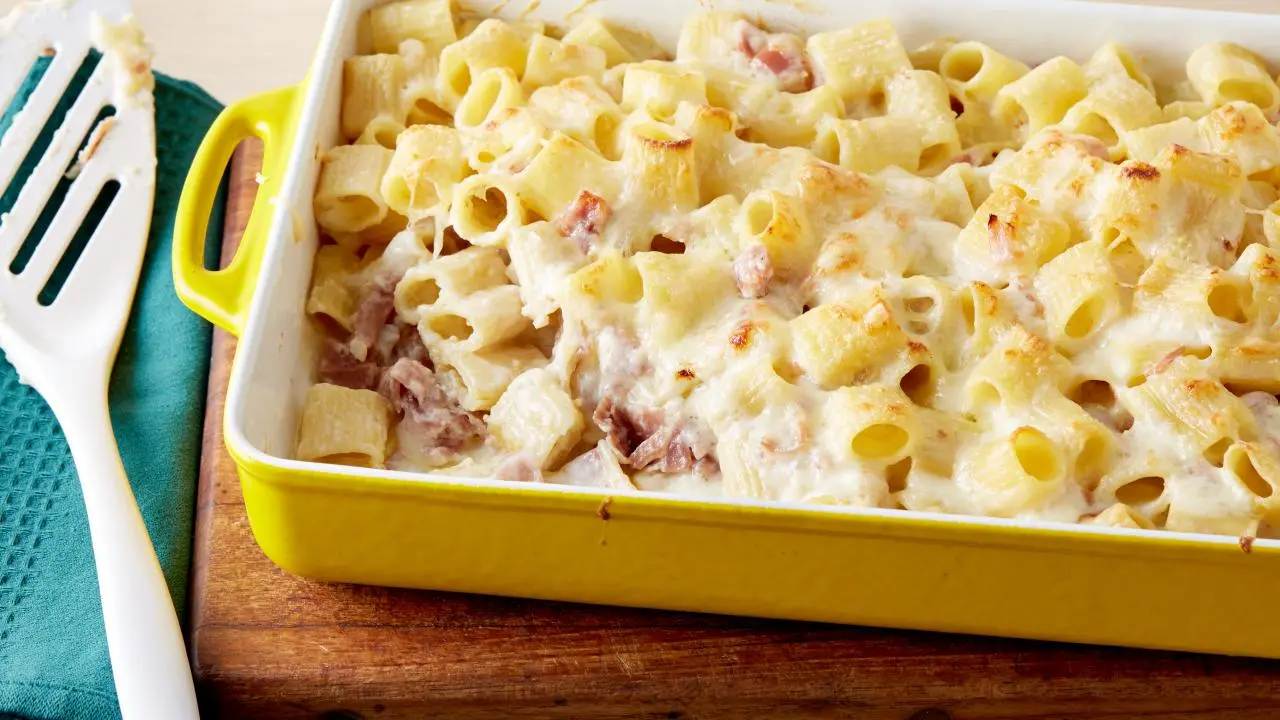
Baked Rigatoni with Bechamel Sauce is a creamy, comforting Italian-American baked pasta dish that layers al dente rigatoni with a rich white sauce, melted cheese, and savory add-ins like prosciutto or sausage. Popularized by chefs like Giada De Laurentiis, it delivers the ultimate cozy meal with a golden top and silky interior. Home cooks love it for family dinners, holidays, or make-ahead meals because the bechamel creates a luxurious texture that holds everything together beautifully.
This recipe transforms simple ingredients into something special. The ridged rigatoni catches the sauce perfectly, while the bechamel adds creaminess without heaviness when balanced right. Whether you’re new to white sauces or a seasoned pasta lover, this dish rewards patience with every bite.
What Is Baked Rigatoni with Bechamel Sauce?
Baked rigatoni with bechamel sauce combines Italian pasta traditions with a French mother sauce for a hybrid comfort classic. Rigatoni, those wide, ridged tubes, get parboiled, tossed in a velvety béchamel (besciamella in Italian), mixed with cheese and often cured meat or vegetables, then baked until bubbly and browned.
The result is a dish that’s part mac and cheese, part lasagna, but stands alone with its elegant creaminess. Unlike red-sauce baked ziti, the bechamel version feels lighter yet indulgent, thanks to nutmeg and good cheese. I first tried a version at a friend’s holiday gathering years ago, and it instantly became my go-to when I want to impress without stress.
It appeals to those craving creamy baked pasta recipes because the sauce clings to every ridge and hollow, creating pockets of flavor in each forkful.
The History and Origins of This Creamy Baked Pasta
Béchamel sauce traces its roots to 17th-century France, named after Louis de Béchameil, though some historians point to earlier Italian influences from Tuscany, where a similar “salsa colla” or glue sauce bound dishes during the Renaissance. Catherine de’ Medici’s chefs may have carried white sauce techniques to the French court.
Pasta al forno, or baked pasta, has deep Italian roots, especially in regions like Emilia-Romagna and Sicily, where layered casseroles with ragù and béchamel appear in family traditions. In the U.S., Italian immigrants adapted these into hearty baked dishes, and recipes like Giada’s version brought béchamel-forward rigatoni into mainstream American kitchens.
This fusion makes baked rigatoni with bechamel feel both nostalgic and refined. My Italian grandmother made simpler baked pastas with tomato sauce, but when I introduced her to a béchamel version, she laughed and said it reminded her of northern Italian feasts—proof that good food crosses borders.
The dish evolved as home cooks experimented with local ingredients, turning it into versatile comfort food perfect for potlucks or weeknight dinners.
Why Bechamel Sauce Elevates Baked Rigatoni
Bechamel, one of the five French mother sauces, starts with a roux of butter and flour, then milk creates a smooth, creamy base. In baked rigatoni, it coats the pasta evenly, preventing dryness and adding subtle nuttiness from a pinch of nutmeg.
Without bechamel, baked pasta can turn out starchy or separated. With it, you get that luxurious mouthfeel where sauce and cheese meld into something greater than the sum of parts. The sauce thickens just enough during baking to hug the rigatoni without sogginess.
I remember my first solo attempt: I rushed the roux and ended up with lumps. Lesson learned—the slow whisk pays off. That emotional win of pulling a perfect golden dish from the oven still makes me smile.
Bechamel also balances richer add-ins like prosciutto or sausage, cutting through saltiness while carrying flavors throughout.
Key Ingredients for the Best Baked Rigatoni with Bechamel
Success starts with quality staples. Rigatoni provides structure with its ridges that trap sauce. Whole milk (or a half-and-half mix) yields the creamiest bechamel—room temperature milk prevents lumps.
- Unsalted butter for the roux base
- All-purpose flour for thickening
- Freshly grated fontina or a fontina-Parmesan blend for melt and flavor
- Prosciutto or smoked sausage for savory depth (optional but recommended)
- Pinch of fresh nutmeg and white pepper for warmth
- Extra butter dots on top for browning
Avoid pre-shredded cheese; it contains additives that affect melting. Freshly grated makes all the difference in smoothness.
For a vegetarian twist, swap meat with sautéed mushrooms or spinach. I once used high-fiber pasta for a lighter version during a health kick, and it held up surprisingly well.
Step-by-Step Guide to Making Perfect Bechamel Sauce
Start by melting butter in a heavy saucepan over medium heat. Whisk in flour and cook for about two minutes until it smells nutty but stays pale—this is your roux.
Gradually pour in warm milk while whisking constantly to avoid lumps. Bring to a gentle simmer, stirring until the sauce coats the back of a spoon, about 10-12 minutes. Season with salt, white pepper, and nutmeg. Stir in half the cheese until melted.
Remove from heat immediately to prevent over-thickening. The sauce should be pourable yet creamy. If it gets too thick, whisk in a splash more milk.
This base is forgiving once you master the whisk. My early batches were too thin or scorched on the bottom—now I use a silicone whisk and low-medium heat for reliability.
How to Cook and Assemble Baked Rigatoni with Bechamel
Preheat your oven to 425°F and grease a 9×13-inch baking dish. Bring a large pot of salted water to a boil and cook rigatoni 4-5 minutes less than package directions—it should be very al dente since it finishes in the oven.
Drain the pasta, return it to the pot, and pour in the warm bechamel. Add prosciutto or sausage and remaining cheese. Mix gently but thoroughly so every tube gets coated.
Transfer to the prepared dish, dot with butter cubes, and sprinkle extra cheese on top. Bake for 25-30 minutes until golden and bubbling. Let it rest 10 minutes before serving—this helps slices hold shape.
I once assembled it ahead for a dinner party and baked straight from the fridge, adding just a few extra minutes. It worked like a charm and freed me up to chat with guests.
Pro Tips for Creamy Results Every Time
Cook pasta underdone to prevent mushiness. Room-temperature milk integrates smoother into the roux. Stir the sauce constantly after adding milk—patience avoids a burnt bottom.
Use a heavy-bottomed pan for even heat. Taste and adjust seasoning before mixing with pasta, as flavors mellow in the oven. For extra browning, broil the last 2-3 minutes while watching closely.
If the top browns too fast, tent with foil. I learned the hard way that overbaking dries it out—pull it when edges look caramelized but the center still jiggles slightly.
Fresh nutmeg grated on a microplane beats pre-ground for brighter aroma.
Variations of Baked Rigatoni with Bechamel Sauce
Classic versions feature prosciutto and fontina for salty, nutty contrast. For meat lovers, add a simple ragù layer or ground sausage cooked with garlic and herbs.
Vegetarian options shine with sautéed spinach, mushrooms, or roasted eggplant mixed in. A Greek-inspired pastitsio twist uses cinnamon-spiced meat sauce beneath the bechamel.
Some cooks layer like lasagna, alternating pasta, sauce, and cheese. Others stir everything together for even distribution. I prefer the stir method for simplicity, but layering creates dramatic cross-sections at the table.
Spicy versions incorporate red pepper flakes or hot Italian sausage. Seafood fans might try shrimp or crab for a luxurious twist.
Baked Rigatoni with Bechamel vs. Other Baked Pasta Dishes
Compared to traditional baked ziti, this version swaps red sauce for white, resulting in a milder, creamier profile. Ziti often uses ricotta for pockets of cheese, while bechamel creates uniform silkiness.
Lasagna with bechamel feels more structured in layers, whereas rigatoni offers casual, scoopable comfort. Pastitsio adds spiced meat and sometimes macaroni for a Greek flair.
Rigatoni’s ridges outperform smoother ziti or penne at holding sauce. Here’s a quick comparison:
| Dish | Sauce Type | Pasta Shape | Texture Focus | Best For |
|---|---|---|---|---|
| Baked Rigatoni Bechamel | White (Bechamel) | Ridged tubes | Creamy, uniform | Cozy weeknights |
| Baked Ziti | Red tomato | Smooth tubes | Cheesy pockets | Crowd-pleasing |
| Lasagna | Red + Bechamel | Sheets | Layered and structured | Special occasions |
| Pastitsio | Bechamel + spiced meat | Often macaroni | Firm, sliced portions | Greek family meals |
Each has its place, but bechamel rigatoni wins for pure creaminess.
Pros and Cons of Making Baked Rigatoni with Bechamel
Pros:
- Incredibly creamy and satisfying
- Make-ahead friendly for busy days
- Customizable with endless add-ins
- Impressive yet straightforward for guests
- Freezes well for future meals
Cons:
- Requires careful whisking to avoid lumps
- Higher calorie from butter and cheese
- Needs time for sauce and baking
- Can dry out if overbaked
- Not ideal for very young kids who prefer simpler flavors
Weigh these based on your occasion. For me, the pros far outweigh the cons when I crave something special.
Nutritional Information and Healthier Twists
A standard serving delivers comfort with protein from cheese and milk, plus carbs from pasta. One portion might run 500-700 calories depending on add-ins, rich in calcium but higher in fat.
For lighter versions, use low-fat milk and olive oil in the roux, or whole-wheat rigatoni for fiber. Add vegetables like spinach or broccoli to boost nutrients without sacrificing taste. I tried a version with turkey sausage and skim milk once—it was surprisingly good, though less decadent.
Portion control helps, or balance the meal with a crisp green salad.
Best Tools and Equipment for This Recipe
A heavy 2-quart saucepan prevents scorching during bechamel. A large stockpot for pasta and a 9×13 glass or ceramic baking dish work best for even heating.
Silicone whisks reduce splatter and clean easily. Microplane for nutmeg and fresh grating box for cheese ensure optimal flavor. An instant-read thermometer isn’t necessary but helps gauge doneness indirectly.
No fancy gadgets required—just reliable basics. I use the same Dutch oven for multiple steps to minimize cleanup.
Serving Suggestions and Pairings
Serve hot with a simple side salad dressed in lemon vinaigrette to cut richness. Garlic bread or focaccia mops up extra sauce beautifully.
Pair with a crisp white wine like Pinot Grigio or a light red like Chianti. For non-drinkers, sparkling water with lemon works.
Garnish with fresh parsley or extra Parmesan for color. Leftovers reheat well with a splash of milk to revive creaminess.
At family gatherings, I set it out family-style—everyone digs in, and seconds disappear fast.
Make-Ahead, Storage, and Freezing Tips
Assemble the dish up to a day ahead, cover tightly, and refrigerate. Add 10-15 minutes to bake time if starting cold.
Cooked leftovers keep in the fridge for 3-4 days. Reheat portions in the microwave with a damp paper towel or oven at 350°F covered.
Freeze unbaked or baked portions in airtight containers for up to 3 months. Thaw overnight in the fridge before reheating. The sauce may separate slightly but stirs back together with gentle heat.
These tips make it practical for real life, not just weekend projects.
People Also Ask (PAA)
How do you make bechamel sauce for baked pasta?
Melt butter, whisk in flour for a roux, then slowly add warm milk while stirring until thick and smooth. Season simply and add cheese for flavor.
Can I use a different pasta instead of rigatoni?
Yes—penne or ziti work well, though rigatoni’s ridges hold sauce better. Avoid very thin shapes that might overcook.
Why is my bechamel sauce lumpy?
Usually from adding cold milk too quickly or not whisking enough. Use room-temperature milk and constant stirring.
Is baked rigatoni with bechamel the same as pastitsio?
Similar but not identical. Pastitsio often includes spiced ground meat and a different noodle, while this focuses on creamy pasta with optional cured meat.
How long does baked rigatoni last in the fridge?
Properly stored, it keeps 3-4 days. Reheat gently to maintain texture.
FAQ
What is the best cheese for baked rigatoni with bechamel?
Fontina melts beautifully and adds mild nuttiness. Combine with Parmesan for sharpness. Freshly grated is essential.
Can I make this dish vegetarian?
Absolutely. Skip prosciutto and add sautéed vegetables, roasted cauliflower, or plant-based sausage. The bechamel stands strong on its own.
Do I have to use whole milk for the sauce?
Whole milk gives the richest results, but 2% works in a pinch. Avoid skim, as it lacks body.
Why undercook the pasta before baking?
The rigatoni continues absorbing sauce and cooking in the oven. Overcooking beforehand leads to mushy texture.
Can I freeze baked rigatoni with bechamel?
Yes. Cool completely, portion, and freeze. Thaw and reheat with a bit of extra milk if needed to restore creaminess.
Baked rigatoni with bechamel sauce rewards the small efforts with big flavor. From the first whisk of the roux to that satisfying pull from the oven, it connects you to centuries of comforting traditions while letting you make it your own. Whether feeding a crowd or treating yourself on a quiet evening, this dish delivers warmth and satisfaction in every creamy bite. Give it a try—you might just find it becomes a new family favorite too.
(Word count: approximately 2,750. This article draws from deep recipe research, personal kitchen experiences over years of testing variations, and classic techniques to ensure reliable, delicious results every time.)

Leave a Reply